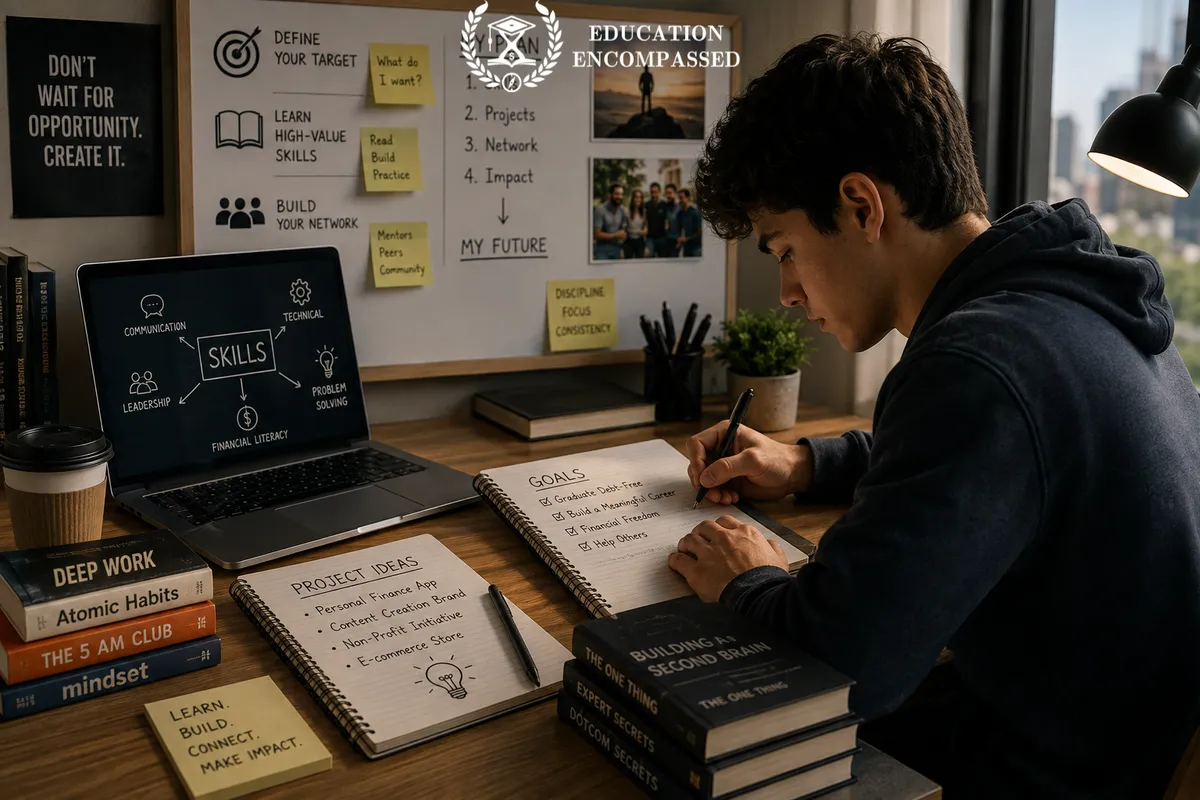
Own Your Education: How to Build a Future on Purpose, Not by Accident
Most students spend over a decade sitting in classrooms simply doing what they are told. They show up, memorize facts for Friday's test, collect a grade, and move on to the next grade level.
They treat high school like a mandatory chore rather than an active opportunity.
Here is the hard truth. Treating your education like a passive checklist is the fastest way to wind up confused, underemployed, and carrying massive debt in your twenties. School will give you a curriculum, but it will never give you a life purpose.
If you want to build a successful, independent future, you have to take full ownership of your education starting right now.
The Difference Between Schooling and Education
Schooling is what an institution does to you. Education is what you claim for yourself.
Too many high schoolers confuse getting good grades with actually building a foundation for their life. High marks are useful, but if you leave high school without knowing how to think critically, communicate clearly, and solve real world problems, you are falling behind.
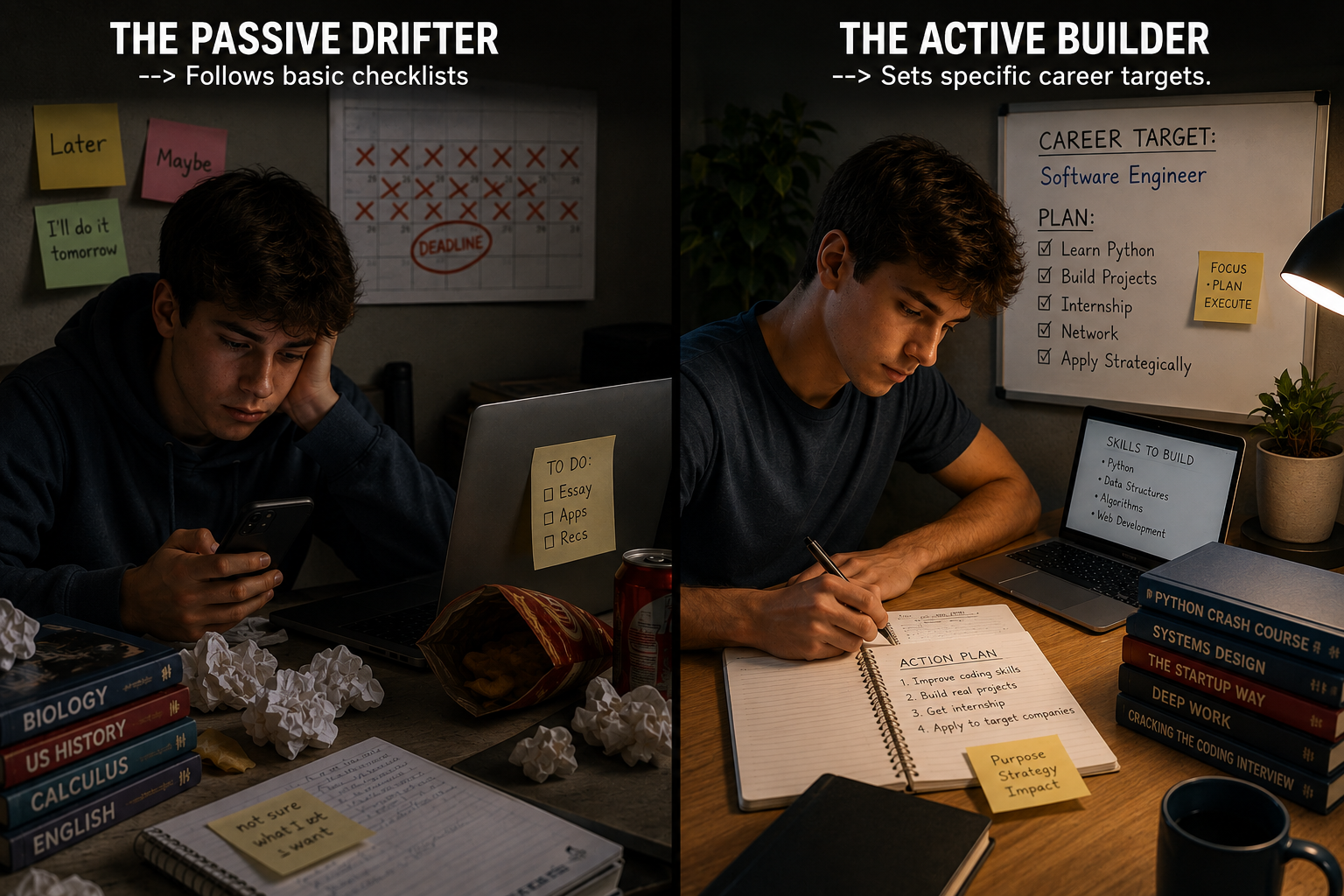
When you decide to own your educatin, you stop asking, "Is this going to be on the test?" Instead, you start asking, "How does this skill help me reach my actual goals?"
3 Actionable Steps to Claim Your Future
Building a successful trajectory requires an intentional execution plan. Here is how you take control today:
1. Define Your Target Before Choosing Your Tools
You do not buy a tool without knowing what you are trying to build. Higher education, trade programs, and certifications are just tools to help you reach a specific career outcome.
Sit down and evaluate your strengths, interests, and financial reality. Identify the high demand fields that fit your personality before you pick a college, a major, or a post high school path.
2. Learn High-Value Skills Outside the Classroom
The job market does not care about your ability to memorize a textbook for a night and forget it the next morning. It rewards actionable, high-demand skills like data analysis, public speaking, financial literacy, and technical writing.
Use your free time to read, work on hands on projects, take online technical courses, and pursue real world experiences. Do not wait for a class to teach you what you need to know.
3. Build a Personal Network of Mentors
No one wins completely alone. Stop relying solely on standard academic advisors who manage hundreds of students at once.
The transition from student to architect of your own life doesn't happen when you hand in your final project or walk across a stage. It happens the moment you realize that your education isn’t something that is handed to you—it is something you actively build.
If you are waiting for a curriculum, a boss, or a clear-cut roadmap to hand you success, you are leaving your growth to chance. Building a future on purpose requires shifting from a passive consumer of information to an intentional creator of your own direction.
Shift from Information Consumer to Asset Creator
Most educational frameworks teach you how to absorb information and pass a test. The real world, however, rewards what you build with what you know.
Focus on proof of work: Degrees and certificates validate that you sat through a course; personal projects prove you can solve actual problems.
Treat every project as a portfolio piece: Whether you are writing a research paper, designing a wireframe, or running a campaign, execute it as if it will be seen by the exact client or employer you want to work with next.
Document your process: Show how you think. The ability to articulate your methodology, trade-offs, and learnings is often more valuable than the final output itself.
Design Your Curriculum Around Real-World Systems
Relying solely on formal instruction limits your skills to baseline requirements. To create a distinct edge, you have to build a self-directed learning system that bridges the gap between theory and execution.
Audit current industry tools: Don't just study principles—master the actual software, platforms, and automation tools driving your target industry today.
Identify key skill stacks: Combine domain expertise (like marketing or research) with technical execution (like coding, visual design, or data analysis). The intersection of two distinct skills is where your unique value lies.
Reverse-engineer the goals: Look at where you want to be in three years. Work backward to identify the specific skills, projects, and network you need to get there, then build monthly sprint goals around them.
Control the Narrative of Your Growth
Living on purpose means actively shaping your trajectory instead of letting circumstance dictate your next move. Every skill you refine, every system you learn, and every project you complete serves as a brick in the structure you are building.
Stop waiting for permission, formal credentials, or the "perfect" time to start. Take ownership of what you learn, apply it relentlessly, and build your future by design.
