$1.7 Trillion in Student Debt. And It Did Not Have to Be That Way.
$1.7 Trillion in Student Debt. And It Did Not Have to Be That Way.
One point seven trillion dollars.
Say that out loud. Actually try to picture it. You cannot. Nobody can. The human brain is not built to comprehend that many zeros. It is an absurd, almost fictional number.
And it is the student debt crisis.
Now here is the part that should make you angry. It is not just part of college. It is not some unavoidable cost of getting an education. It is what happens when people do not plan. It is the price of poor decisions made without information, without a roadmap, without anyone sitting down and saying: here is what this is actually going to cost you.
If you fail to plan, you plan to fail. That is not a bumper sticker. That is a $1.7 trillion reality.
What Poor Planning Actually Costs You
Let me make this concrete.
You go to college without a clear major. First year, second year, you are taking classes that feel fine. Then you change your major. And suddenly, a chunk of those credits do not count toward your new degree. You need another year. Maybe two.
That is one to two extra years of tuition, housing, food, and fees. That is one to two extra years of loans accumulating. And if you went with an unsubsidized loan, that interest did not wait for you to graduate. It started the moment you signed.
I said it in a complicated way because that is exactly how it feels. And that is okay. What is not okay is letting it happen without a fight.
The fight is called a plan.
Families need to be sitting down two and three years before college even starts, mapping out the financial picture. Students need to have a career direction and a major locked in before they walk into a classroom, so they are not paying to wander. And then those two plans need to meet in the middle.
Everyone Is Chasing the Wrong Schools
Here is something I want to challenge you on.
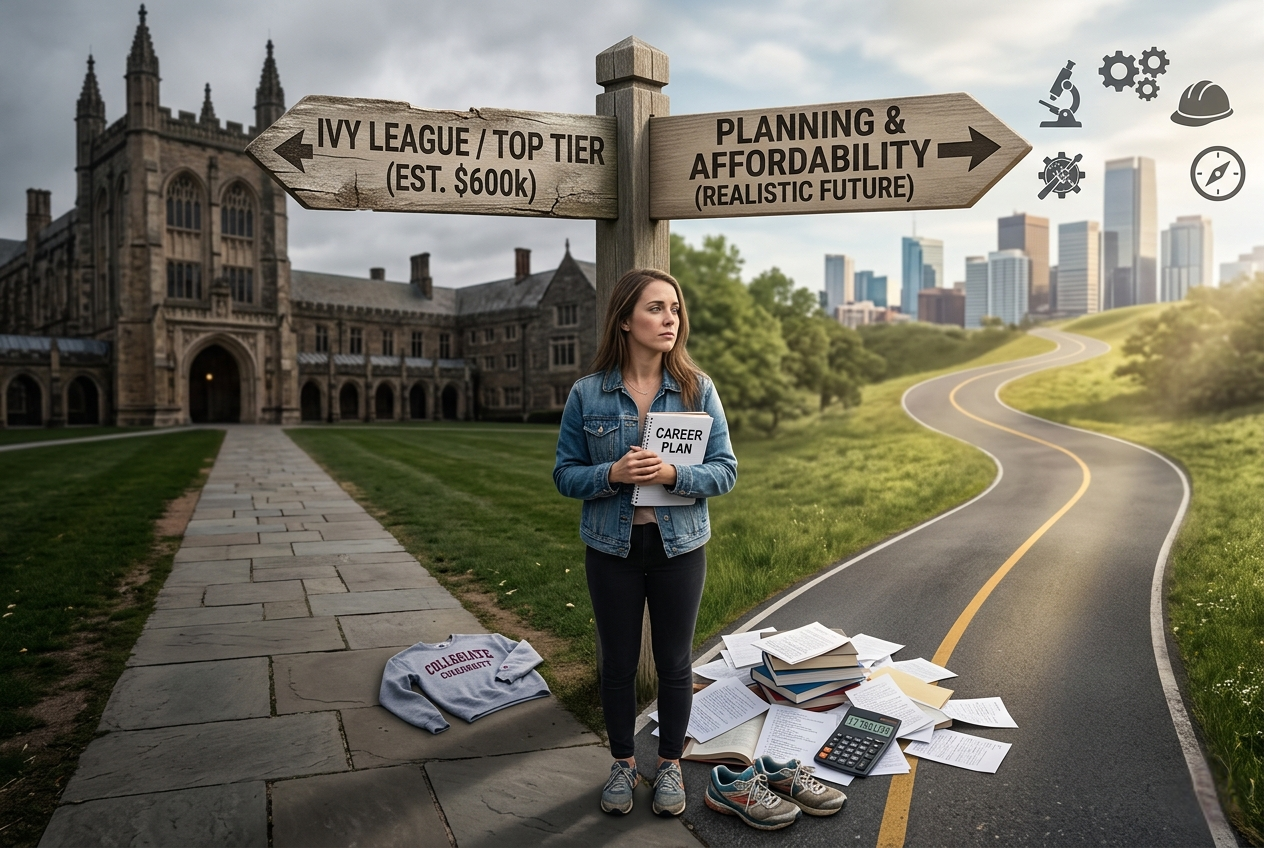
Most students and parents I talk to have two schools in mind. The local school close to home, and the Ivy League. That is the whole list. Harvard, Yale, maybe Dartmouth or Brown. And then whatever is in driving distance.
Here is my question. Can you even name every Ivy League school? Most people get to three or four and then it gets fuzzy. Cornell? UPenn? Is Brown one? I think so.
I do not say that to embarrass anyone. I say it because we are obsessing over a handful of schools that most of us cannot fully name, while ignoring the other 14,990 universities that exist in this country.
And let us be honest about why Ivy League is so appealing. Yes, the network matters. Yes, the name opens doors. But part of it, a real and significant part, is ego. We want the designer name. We want to say it at dinner parties. We want the sweatshirt.
That is understandable. It is also not a college selection strategy.
The best school for your student is the one where they will actually succeed. Not the one that looks best on a car window sticker.
Brand Is Not Always Best
Here is a real scenario.
I worked with a student who got into Texas A&M, Texas Tech, and a handful of other Texas schools. The school that was the best academic and personal fit? Texas Tech. The school that offered the best financial aid package? West Texas A&M University.
Why? Because it is a smaller, less competitive school, which means they had more money available to offer students. The family ultimately chose Texas Tech, and that was their decision to make. But the point is they looked at everything before making it. They did not let a brand name make the choice for them.
Smaller schools, schools you may have never heard of, often have better financial aid packages than the big names. That is not a consolation prize. That is a strategic advantage if you know how to look for it.
How to Actually Look at What College Will Cost You
Here is the process, and it is simpler than people make it out to be.
Start with a college list. Every school on your list has a cost of attendance posted on their website. This number includes tuition, housing, food, and cost of living. Pull that number for every single school and put it in a spreadsheet. What you will find is a range that goes from manageable to completely out of control, and you need to see that range clearly before you fall in love with any one school.
Then you look at your own finances. This is where FAFSA comes back in. FAFSA goes back two years, which means if your student is a sophomore right now, this conversation is not too early. It is right on time.
One thing worth knowing: student income is counted at a much higher percentage toward tuition contribution than parent income. The disparity is significant. So if your student has money sitting in their own account, it may be worth moving it under the parents' name before filing. It is not a trick. It is optimization. And it can meaningfully change your financial aid outcome.
If you are already a junior or senior or even graduated, it is not too late. You just have less runway. Work with what you have and make the smartest moves available to you from here.
Build the college list.
Pull cost of attendance for every school.
Audit your finances and optimize before FAFSA.
Look at what you can realistically afford to pay back, not just borrow.
Then make the decision with your eyes open.
Direction Is a Choice
The student debt crisis did not happen because college is expensive. It happened because millions of people made expensive decisions without a plan.
You do not have to be one of them.
Every application is going to ask you why you want to attend that school. Think hard about that answer. Not the version that sounds impressive. The honest version. The one that accounts for your chance at success, your chance of graduating, and your chance of coming out the other side without becoming another number in a trillion-dollar statistic.
Direction is not an accident. It is a decision. Make it consciously.
